

Introduction
Every time we use an app, visit a website, or read a poster, we experience design. Some designs are easy to use and pleasant to look at. Others leave us confused, frustrated, or ready to leave. That difference often comes down to how well graphic design and user experience work together.
UI/UX design and graphic design are closely related, but they have different roles. UI, or user interface design, shapes the screens and controls people interact with. UX, or user experience design, focuses on how the whole interaction feels and whether users can accomplish their goals. Graphic design communicates ideas through visual elements such as color, typography, images, and layout. When these disciplines support one another, they can make a product both useful and memorable.
What UI and UX Design Mean
UX design considers the complete experience a person has with a product or service. A UX designer asks questions such as: Who will use this product? What are they trying to do? What obstacles might they encounter? The answers help guide decisions about structure, navigation, content, and features.
UI design focuses on the points of interaction: buttons, menus, forms, icons, and screens. A well-designed interface makes those elements clear and predictable. A user should be able to recognize what is clickable, understand what a button will do, and move through a task without unnecessary effort.
The two fields overlap, but they are not interchangeable. A product can look attractive while being hard to use. It can also function well but feel inconsistent or uninviting. Good UI and UX design bring clarity and ease to the product while giving it a coherent visual style.
The Role of Graphic Design
Graphic design gives visual form to a message. Designers use typography, color, spacing, imagery, and composition to help people understand information and respond to it. These choices matter in digital products just as much as they do in posters, packaging, books, or advertisements.
For example, a clear type hierarchy can help users distinguish a page title from a short description and a button label. Color can draw attention to an important action, while consistent icon styles help people recognize familiar functions. Thoughtful spacing can make a busy screen feel easier to scan.
Graphic design also helps establish a product’s identity. A consistent palette, type style, and illustration approach can make a brand recognizable across a website, mobile app, and social media. But visual identity should support comprehension. Decoration that competes with important information can make an interface harder to use.
Why the Disciplines Need Each Other
Imagine an online checkout page with beautiful illustrations and elegant typography, but no clear indication of how to complete a purchase. The page may look impressive, yet it fails its main purpose. Now imagine a simple checkout that works but uses tiny text, crowded fields, and confusing labels. It may technically function, but the experience feels stressful.
Combining UI/UX and graphic design helps avoid both problems. UX decisions establish the journey: what information appears, in what order, and how users move between steps. UI and graphic design make that journey understandable through visual cues and clear controls.
This partnership is valuable because design is not just about making things attractive. It is about making information easier to understand and actions easier to complete. Visual choices can guide attention, reduce uncertainty, and build confidence when they are based on users’ needs.
Designing for Real People
Good design starts with understanding the audience. A team might interview users, observe how they complete a task, or review feedback from an existing product. These methods can reveal problems that designers may overlook, such as unclear terminology or steps that take too long.
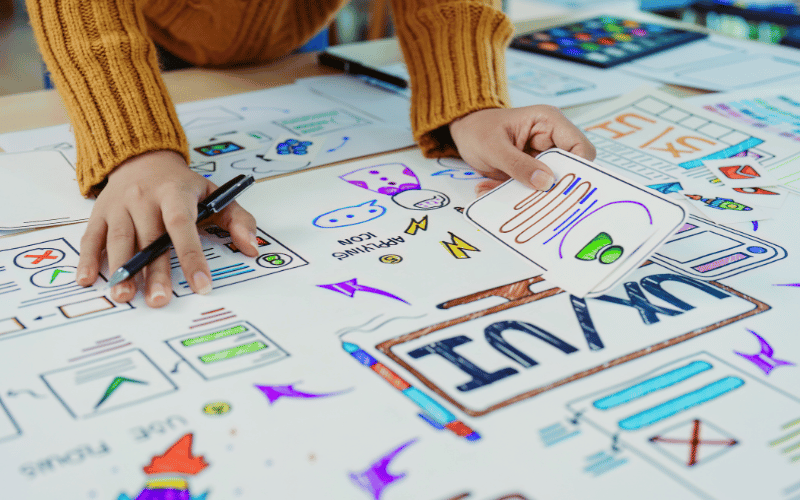
Designers then create sketches or wireframes to map out a page before refining its appearance. A prototype can show how the product will behave, allowing a team to collect feedback early. Testing with people who represent the intended audience can uncover confusing interactions before the product is released.
Accessibility is also essential. Readable text, sufficient contrast, keyboard support, and clear focus indicators help more people use a product, including people with visual, motor, or cognitive disabilities. Accessible design often benefits everyone: captions help in noisy places, larger text reduces eye strain, and clear labels make forms easier for all users.
Consistency Builds Trust
Consistency helps users learn how a product works. If buttons look and behave similarly across pages, people can rely on what they have already learned. A consistent visual system might define colors, typography, spacing, icons, and interaction states, such as what a button looks like when it is active or disabled.
Consistency does not mean every screen must look identical. Different pages may serve different purposes, and the design should accommodate those needs. The goal is to make the product feel connected, so users can focus on their task instead of figuring out a new interface each time.
Balancing Creativity and Clarity
Creative design can make a product stand out, tell a story, and create an emotional connection. Unusual layouts, bold colors, or playful illustrations can be effective when they fit the brand and the audience. But creativity works best when users can still understand what they are seeing and what to do next.
A useful approach is to make the core experience clear first, then add visual details that strengthen the message. A strong design is not necessarily the most complicated one. Often, the most effective solution is the one that removes distractions and helps users reach their goals with confidence.
Conclusion
UI/UX and graphic design serve different purposes, yet they are strongest when they work together. UX design helps shape a smooth and meaningful experience. UI design makes interactions clear, while graphic design gives information visual character and structure.
The best designs balance beauty with usefulness. They are built around real people, communicate clearly, remain accessible, and use consistent visual choices to build trust. Whether creating a website, an app, or a printed campaign, designers can make a lasting difference by treating appearance and usability as parts of the same conversation.